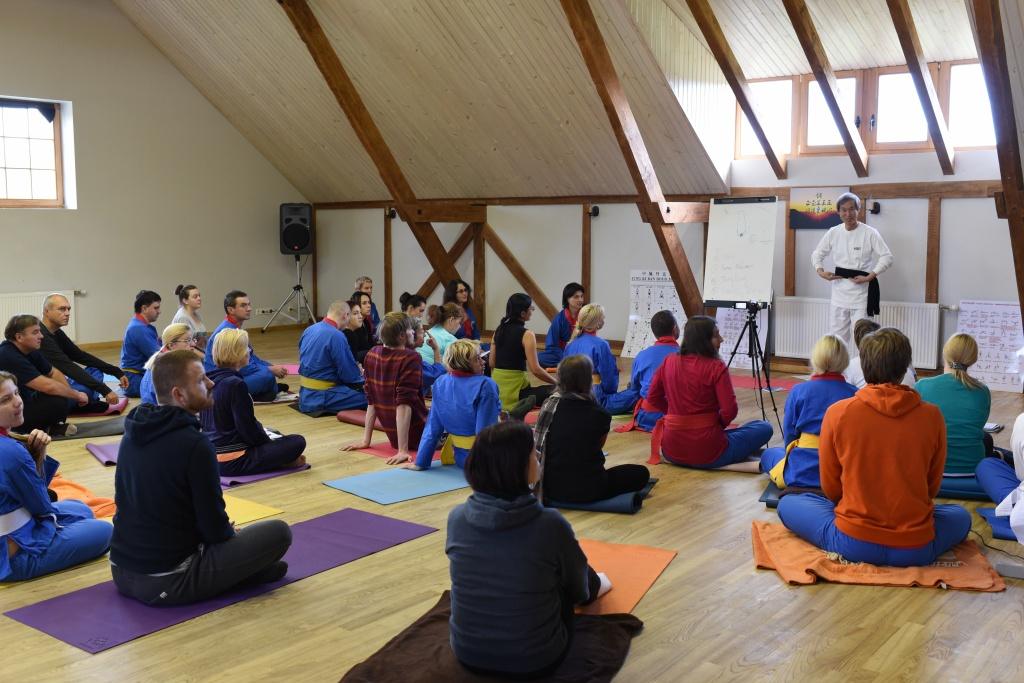
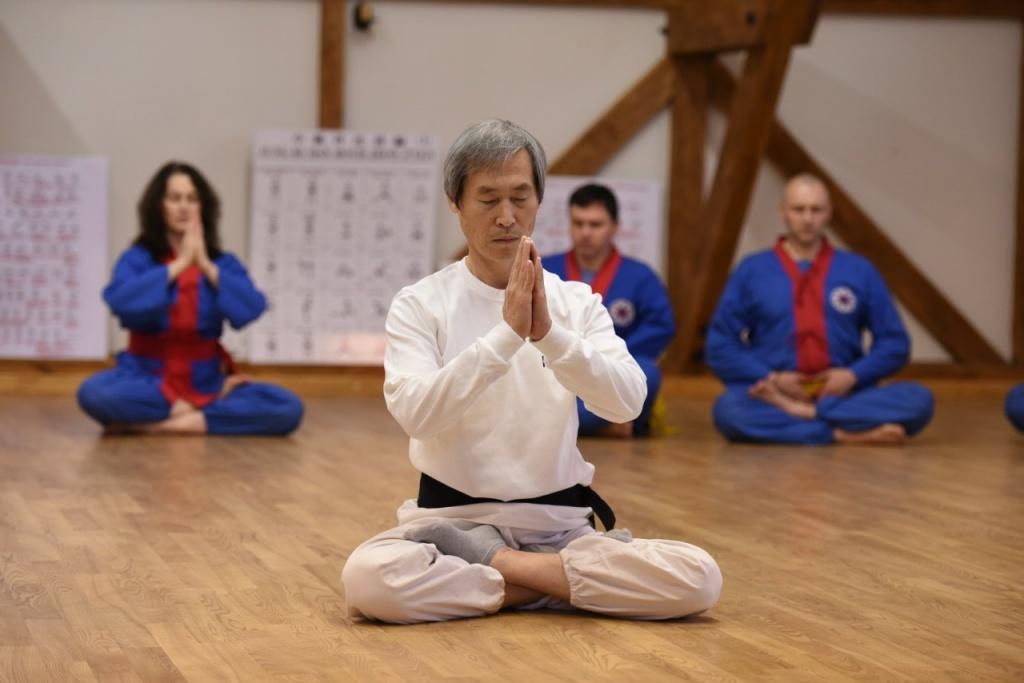
The aim of Sundo is to help people become well-rounded, strong, and noble in character. It is a deep, complete system of practice that unites breath, body, and heart.
Sundo means “The Way for Humans to be united with Heaven .” It is a practice that helps us live in harmony with the natural laws of the universe—connecting the energy of the heavens with the heart and body of a human being.
Unlike many Eastern traditions that use the characters 山人日 (mountain–man–sun), symbolizing reclusive spiritual practice in the mountains, Sundo uses 天人日 (heaven–man–sun), expressing the sacred connection between humans and the heavens.
The ancient name for Sundo is Bahk-dol-bup, made of three meaningful Korean syllables:
Bahk-dol-bup – Acquiring the power and wisdom from the sun while following the great movement of the nature.
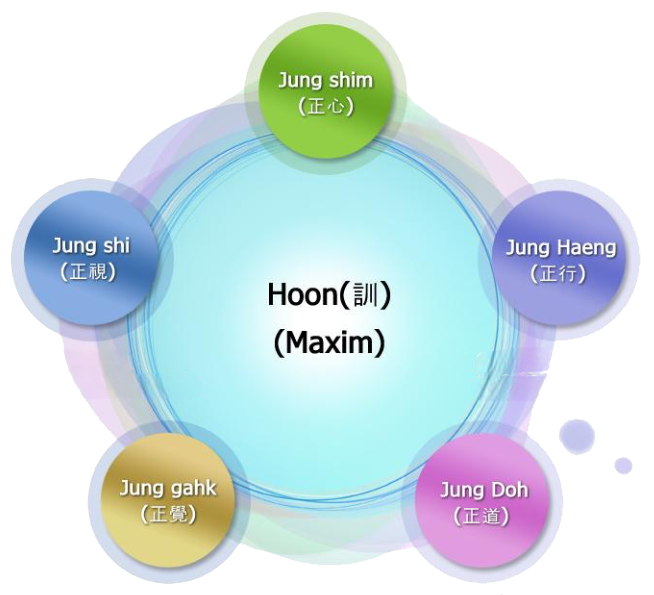
Sundo principles are recited at the beginning of practice.
The principles focus the mind and remind us of the purpose of the practice.
Sundojoo is an audio recording that guides the Sundo practice.
The recording is Master Chung-san’s voice continually repeating 16 words.
This recording is called the Doh-In-Doh-Song – The Song of Guidance to the Truth. It’s aim is to focus attention and make the heart and breath even.
The Sundojoo is not just background sound—it’s a living thread that connects the practitioner to the tradition, the breath, and the inner stillness where transformation begins.
Realizing the source of the ultimate truth
Acquiring wisdom and ability
Entering the harmony between man and heaven
We will save all living things
The first three minutes of the Sundojoo explain the essential principles of Sundo’s first stage, Jung-Gak-Do. Its purpose is to:
“Middle Energy is the Earth (center) element. The changes of Yin and Yang, the rise and fall of water and fire, and the circulation of energy and blood are due to uniting the power of Middle Energy. The spleen and stomach are the middle and are the earth elements of the human body. Therefore, the Middle Energy is the important life principle. Yin and Yang in the body maintain life when they are united and die when they are separate, therefore the Middle Energy is the true characteristic of Yin and Yang. Middle Energy is the controlling characteristic of Yin and Yang and the physiological characteristic of existent and nonexistent change.
Vigorous power comes from the lower danjun and goes to the liver to become new blood and energy that invigorates the body. Therefore, Joong-gi danbup’s 50 earth motions (postures) system is made the first in Dao practice.
By synthesizing the divinity of the heavens, the virtuous mechanism of earth, and the energy flow of the five energies, all things can transform. Therefore, the Gun-gon (heaven-earth) energy becomes the supreme source for the transformation of all things.
Jung (essence), Ki (energy) and Shin (spirit) are the three foundations of our life, in other words, they are called the Three Sources of life. Gun is the source of heavens and Gon is the source of earth, and we are the source of humans. The source of humans is stored in the middle of Gun and Gon, thereby in Dao practice, the Gun-Gon danbup is made the second haeng-gong (practice).
With the five operations of heaven and six energy operations on earth, the six energies (water, fire, wood, metal, earth and the triple burner) come into existence. The six energies are the power of water and fire synthesized. This power becomes the human body’s Won-gi (source energy) and warmth. And the heavenly way shows a relationship between the 365 units of orbit around the sun and the 365 bone joints of our body. Because of this relationship we should practice this asceticism (Won-gi danbup) from a universal point of view.”
To support this inner balance, Sundo is built around three main danbup (training sets), each reflecting a different layer of cosmic and personal development.
No. While it has roots in Korean Taoist tradition, Sundo today is a secular practice open to everyone. It supports well-being, not belief.
Even two or three short sessions per week can bring real benefits. Regularity is more important than intensity. You can practice at home or join our guided sessions.
Not at all. Sundo is gentle and adaptable. You start with simple postures and breathing, gradually building strength, focus, and inner balance at your own pace.
Practicing Sundo promotes stress relief, improved posture, calm breath, core strength, inner clarity, and supportive self-healing processes rooted in balanced energy flow.
Copyright © 2025 All Rights Reserved.